Get Started


Build restaurant inventory software on your own data
Restaurant Inventory that lets you count stock, track usage and reorder before you run out. Built on your existing database, with permissions and audit logs.
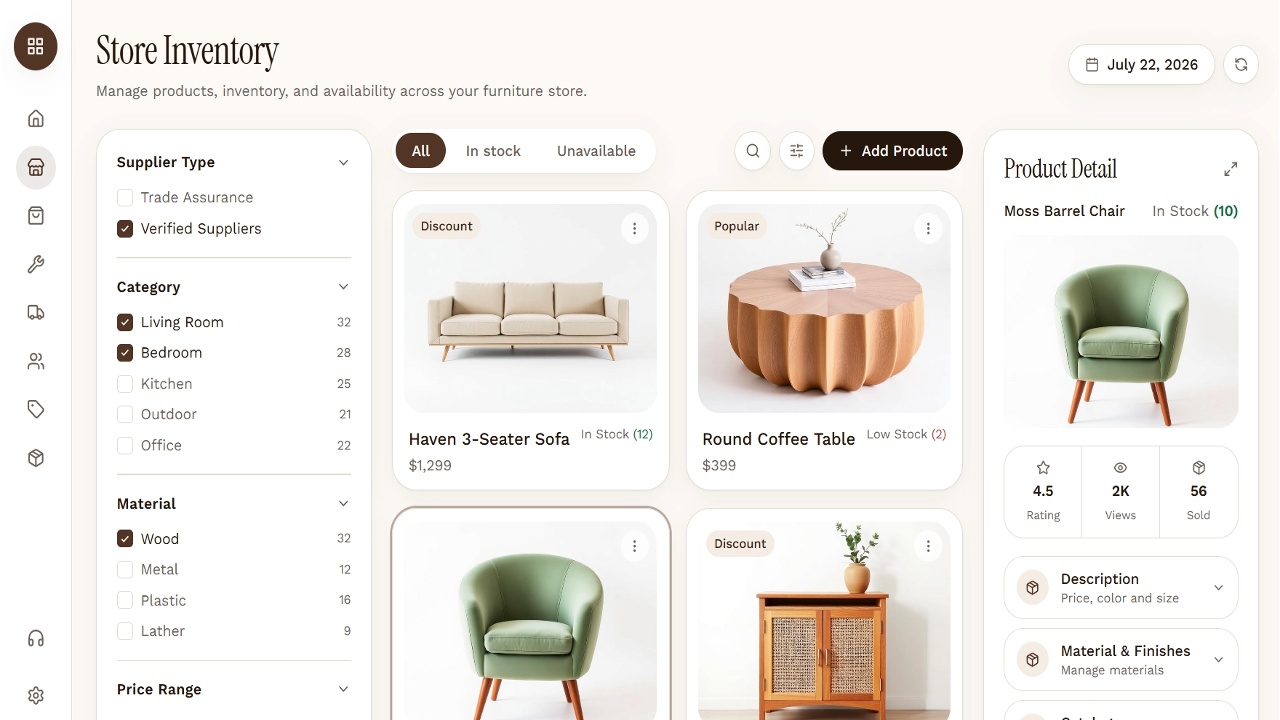
Build exactly what your team needs
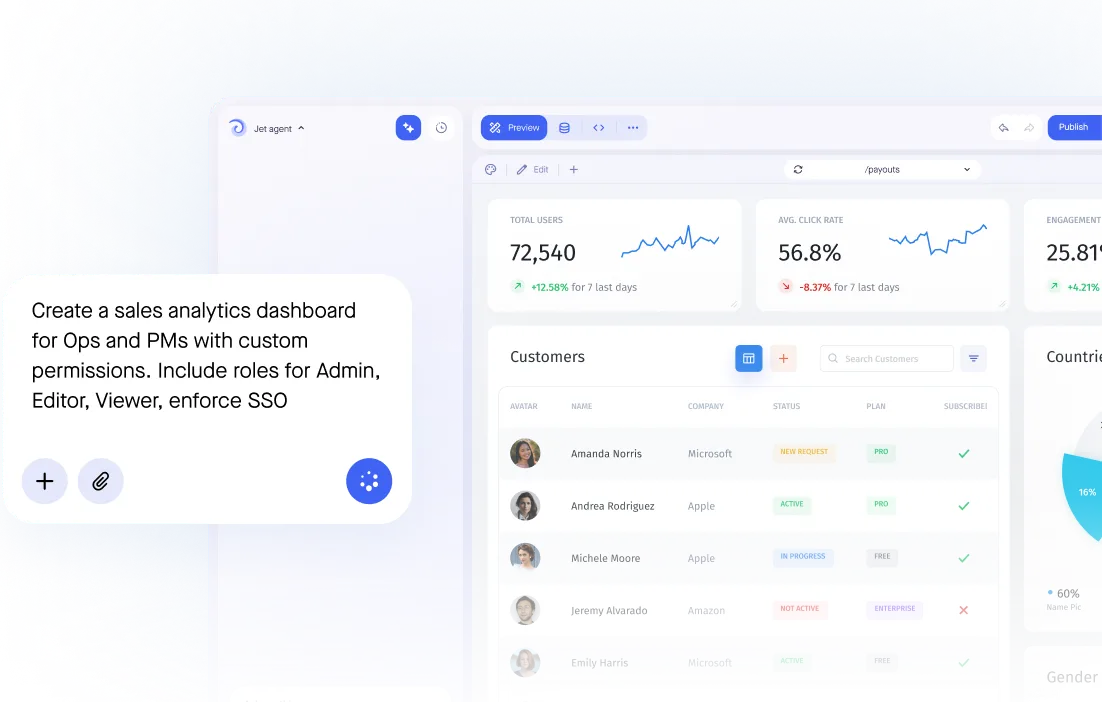

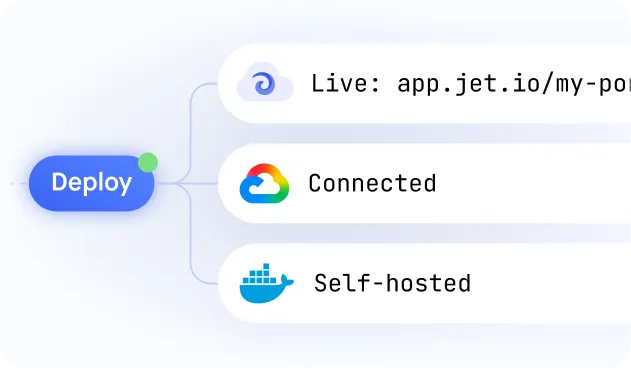
Build secure app fast



Build secure app fast
.jpeg)
Connect to Your Existing Inventory or ERP Database
Jet Admin connects directly to Postgres, MySQL, MongoDB, or any REST API — so your inventory app sits on top of the database you already use. No need to re-enter product data, migrate records, or keep two systems in sync.
.jpeg)
Bulk Edit and Mass Update Stock Records
Adjust stock levels, update prices, or change supplier details across dozens of records simultaneously with inline bulk editing — something form-based no-code tools can't match. Jet Admin's table views give your ops team full spreadsheet-like control.
.jpeg)
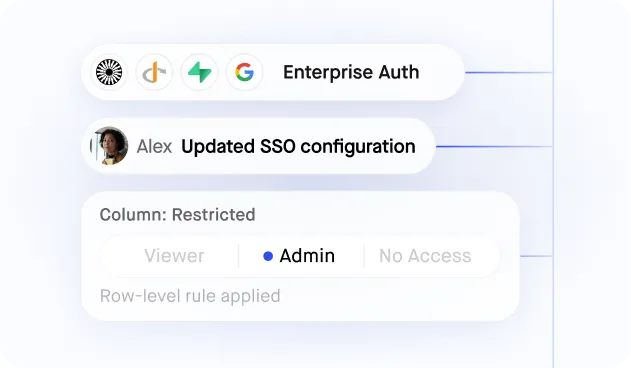
Granular Roles for Warehouse, Ops, and Suppliers
Create separate views and permission sets for warehouse staff (view/update stock levels), ops managers (full CRUD plus reports), and external suppliers (view their own orders only) — all running off the same dataset with zero data duplication.
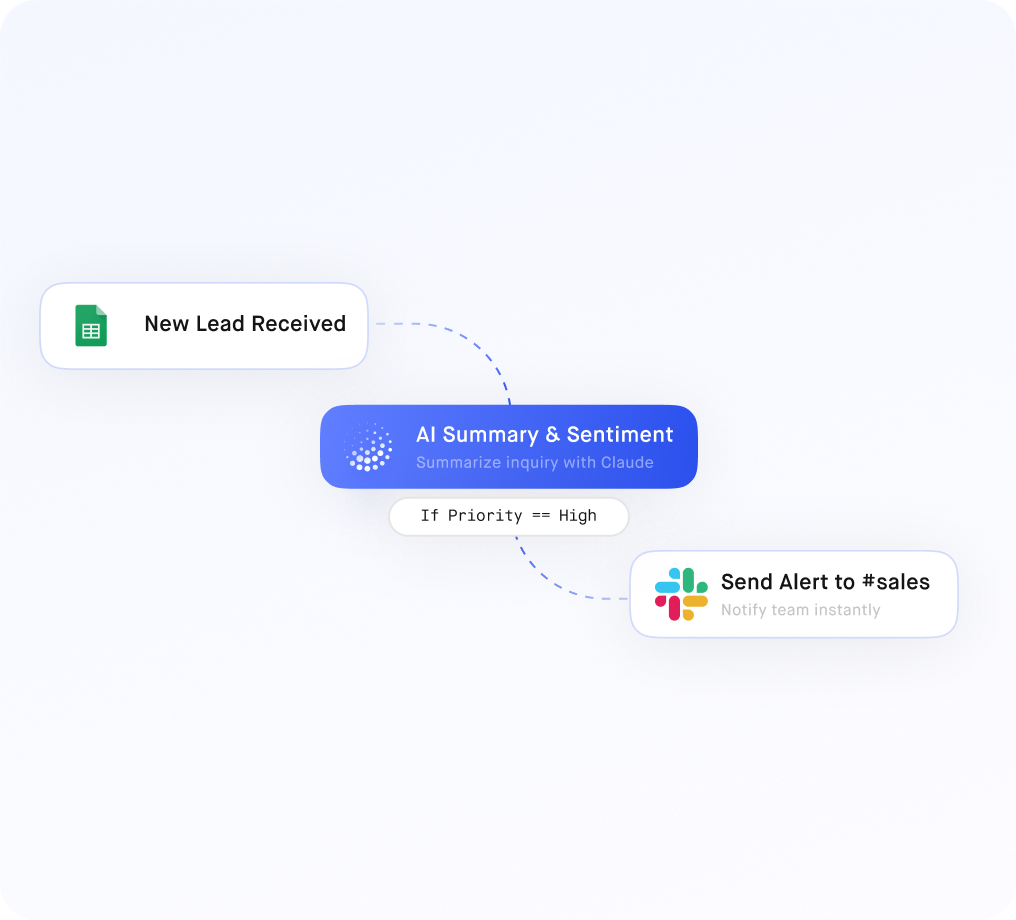
Real-Time Low Stock Alerts and Reorder Triggers
Set threshold-based alerts on any field in your inventory database. When stock falls below the defined level, trigger automated notifications to procurement — directly from your data, without building a separate alerting pipeline.
.jpeg)
SQL-Powered Search and Filtering at Scale
Jet Admin's query builder lets your team filter and search inventory across millions of SKUs using the full power of your SQL database. No limits on catalog size, no slow API calls — just fast, direct database queries with a clean UI.
Similar Use Cases
No items found.














.png)




.png)


.png)






.svg-min.png)


















Frequently asked questions
What is restaurant inventory software?
Software that tracks ingredients rather than products: what was delivered, what was used, what was wasted and what that did to food cost. The distinguishing problem is that you buy by the case and consume by the gram.
Does it handle unit conversions?
Yes, and this is usually the deciding feature. A case of tomatoes received becomes grams consumed against a recipe, with the conversion held on the item rather than in a chef's head.
Can kitchen staff count on a phone at close?
Yes. The count sheet runs on a phone in the walk-in, in the order the shelves are actually arranged, which is what makes a nightly count survive contact with a real kitchen.
Can it track allergens and expiry?
Yes. Allergen flags and use-by dates sit on the ingredient record, so an allergen matrix for a dish is derived from its recipe rather than maintained separately and forgotten.
Can we see theoretical versus actual usage?
Yes. Recipe-level theoretical usage compared against counted usage gives you variance by ingredient — which is how you find the portioning problem rather than just learning food cost went up.