Get Started


Build incident management software on your own data
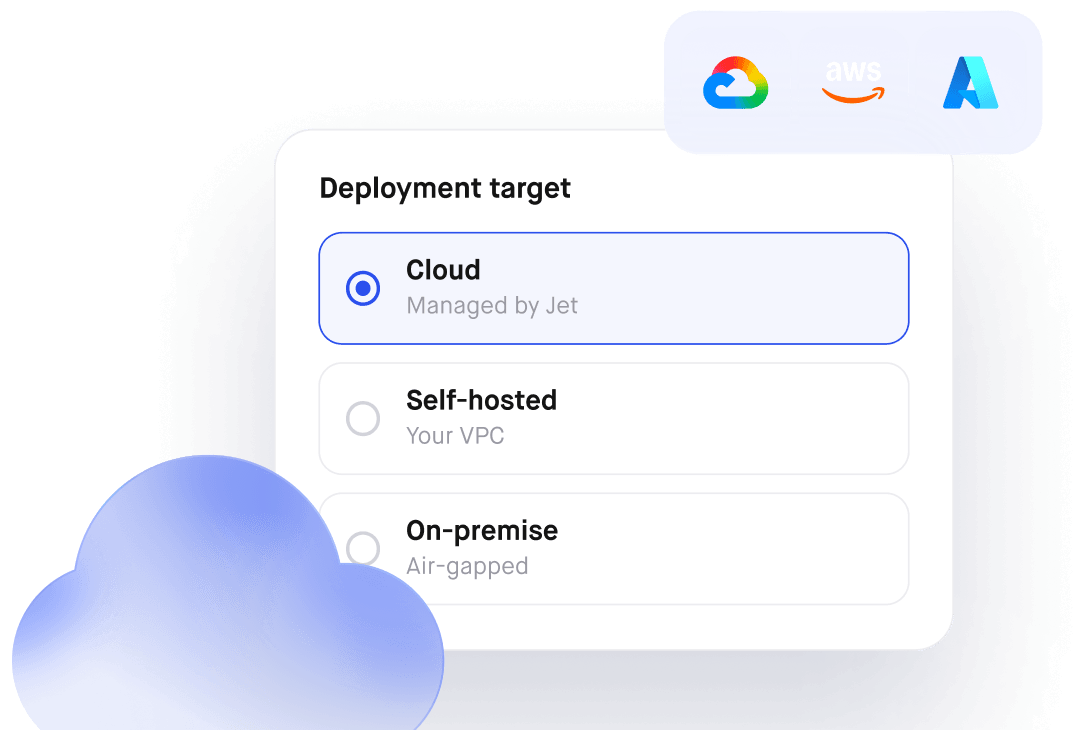
Incident Management that lets you record obligations, evidence and reviews somewhere auditable. Connect your database. Control who sees what. Self-host it.

Build secure app fast



Build secure app fast
.jpeg)
Connect to Any Database: SQL, NoSQL, REST, or GraphQL
Jet Admin connects to Postgres, MySQL, MongoDB, MSSQL, Firebase, Firestore, REST APIs, and GraphQL — covering the full range of backends your engineering team uses. No wrapper, no middleware, direct connection.
.jpeg)
Full CRUD Without SQL or Code
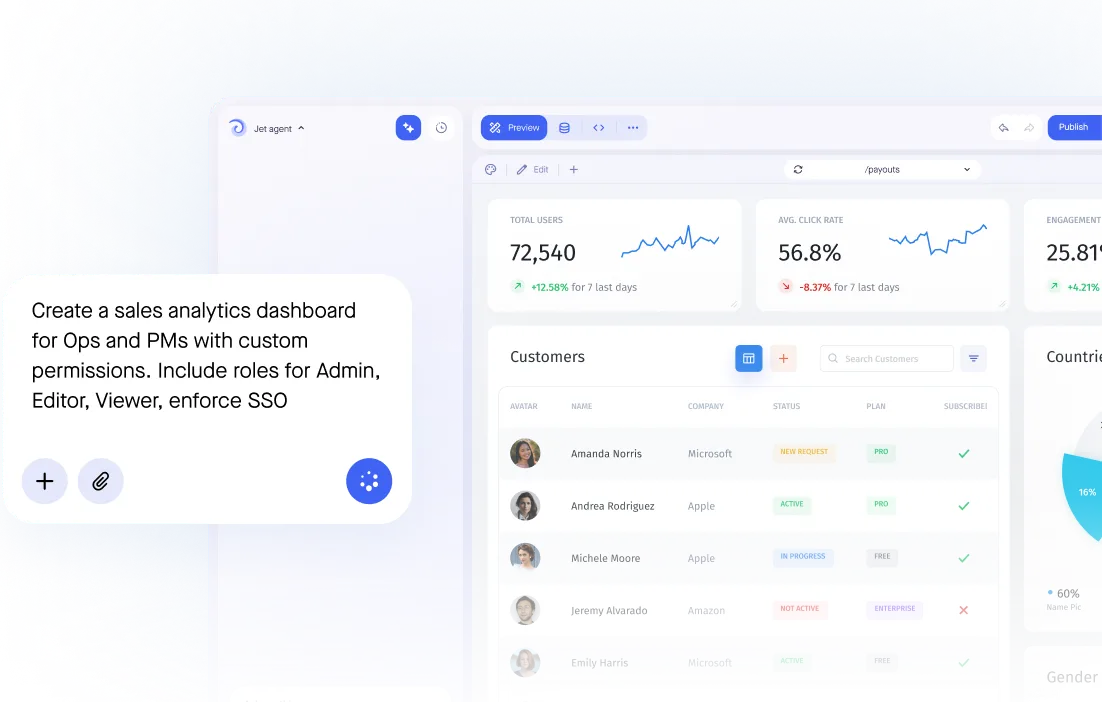
Create, read, update, and delete records across complex relational tables through a visual interface — filter, sort, and search your data at scale without writing SQL queries or building custom admin pages.
.jpeg)
Bulk Edit and Mass Update Across Thousands of Records
Update field values, change statuses, or run transformations across thousands of records simultaneously with inline bulk editing — something spreadsheet tools and basic admin frameworks can't handle at scale.
.jpeg)
Custom Views per Team or Role
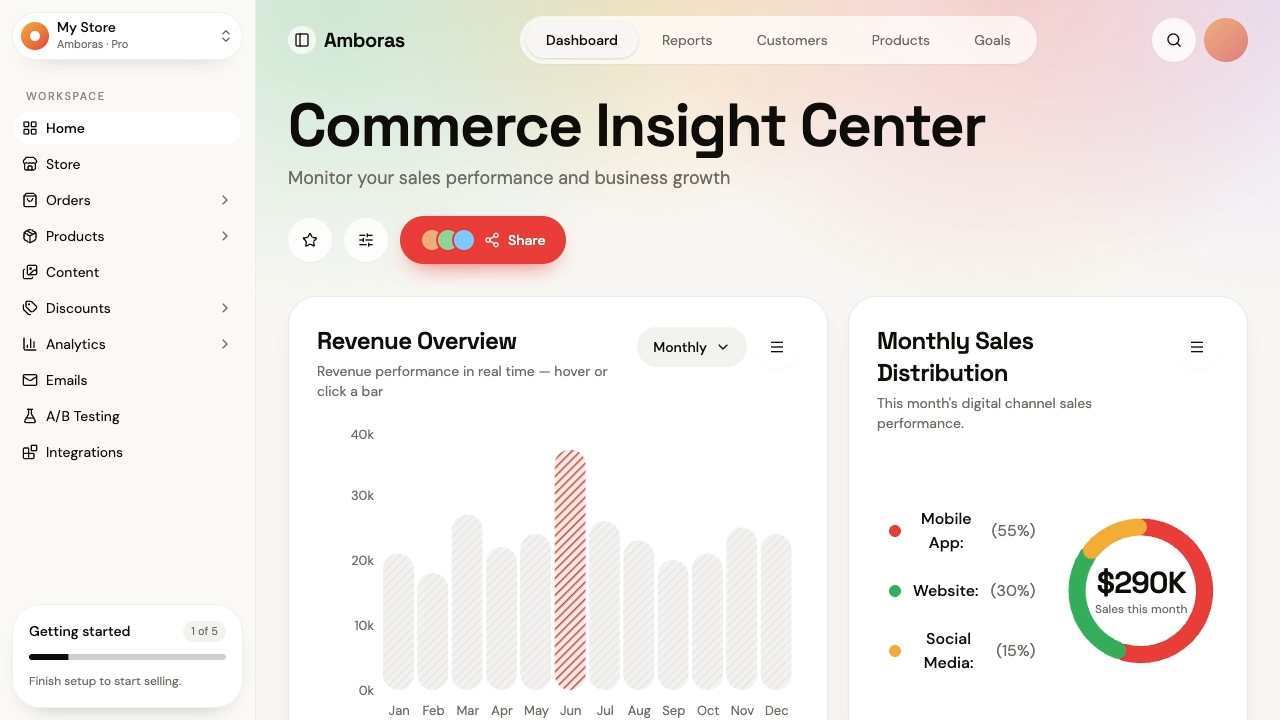
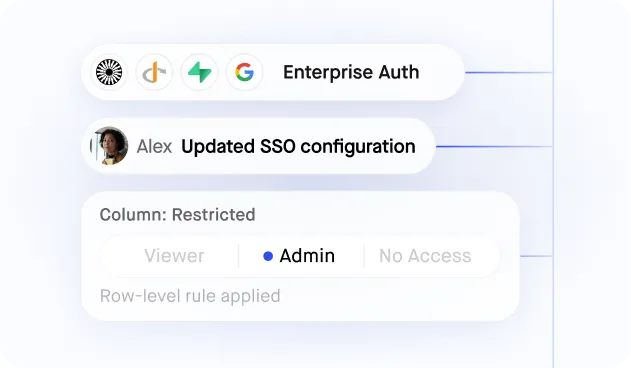
Build tailored table, form, and detail views for each team — with role-based access controlling which records and fields are visible. One database, multiple interfaces for different audiences.
.jpeg)
Audit Log: Track Every Change Across Your Database
Every record creation, update, and deletion is logged with timestamp and user attribution — giving you a full audit trail for compliance, debugging, or dispute resolution without a separate logging system.
Similar Use Cases
No items found.





.png)










.png)

























.png)



Frequently asked questions
What is incident management software?
Software that runs an incident from detection through response to resolution, and keeps the timeline that the review afterwards depends on.
Does it capture the timeline automatically?
As far as your systems allow. Actions taken in the tool are timestamped as they happen, which is what makes a post-incident review factual rather than reconstructed from memory a week later.
Can it handle severity and escalation?
Yes. Severity drives who is notified and how quickly, and escalation triggers when an incident stays open past its threshold rather than when someone remembers.
Does it support post-incident review?
Yes. Actions arising from a review become tracked items with owners, which is the difference between a review that changes something and one that produces a document.
Can we see patterns across incidents?
Yes. Recurrence by service, cause or component is what turns incident data into prevention rather than a log.