Get Started


Build your own fixed asset management software
Fixed Asset Management that lets you know what you own, where it is and who signed it out. Runs on the data you already have. Role-based access included.
Build exactly what your team needs

Build secure app fast



Build secure app fast
.jpeg)
Connect to Your Existing Inventory or ERP Database
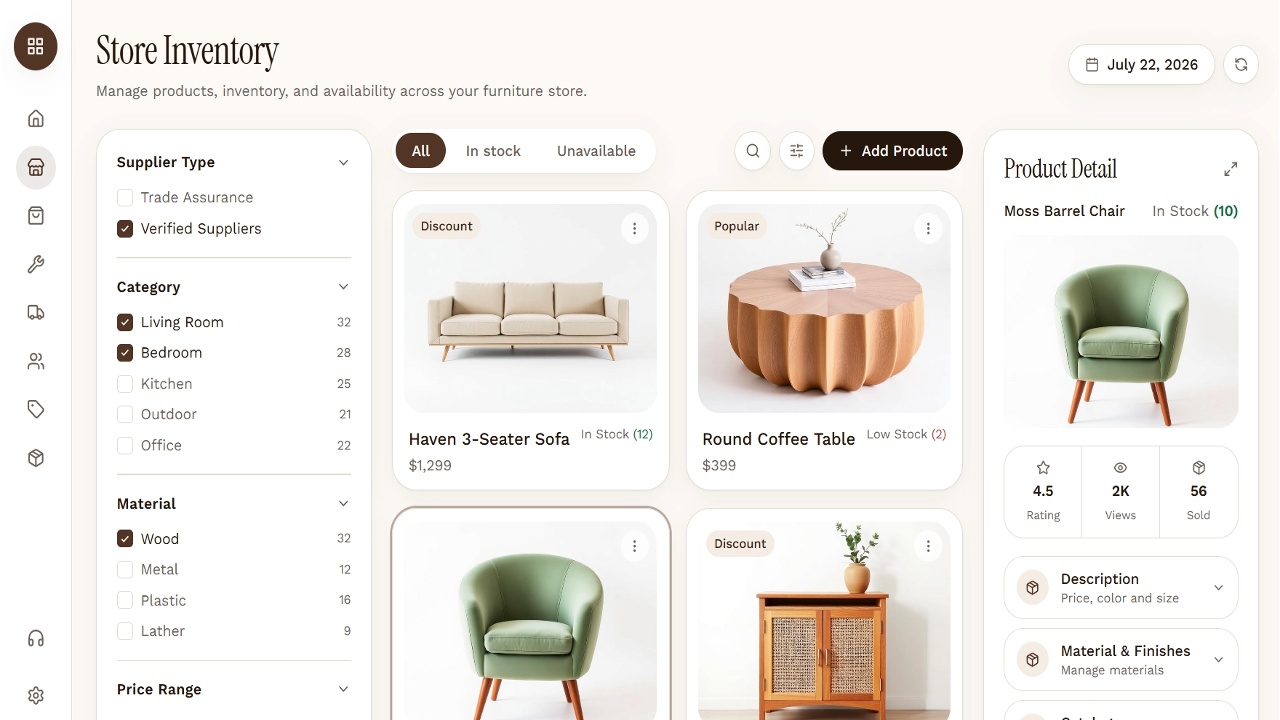
Jet Admin connects directly to Postgres, MySQL, MongoDB, or any REST API — so your inventory app sits on top of the database you already use. No need to re-enter product data, migrate records, or keep two systems in sync.
.jpeg)
Bulk Edit and Mass Update Stock Records
Adjust stock levels, update prices, or change supplier details across dozens of records simultaneously with inline bulk editing — something form-based no-code tools can't match. Jet Admin's table views give your ops team full spreadsheet-like control.
.jpeg)
Granular Roles for Warehouse, Ops, and Suppliers
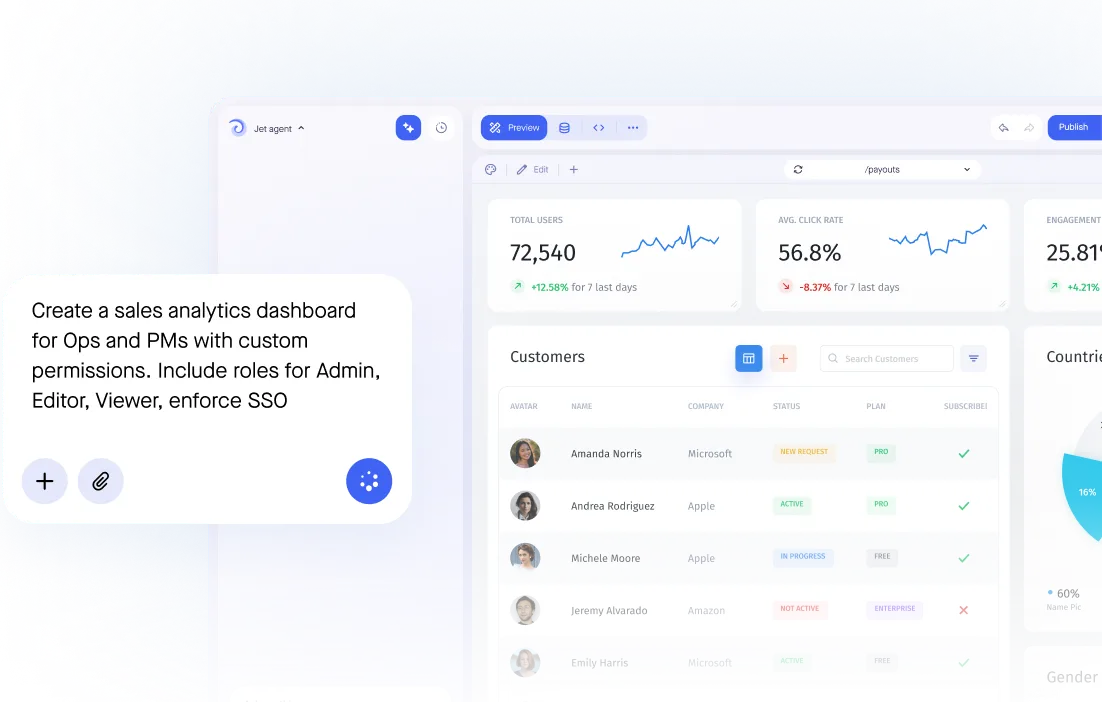
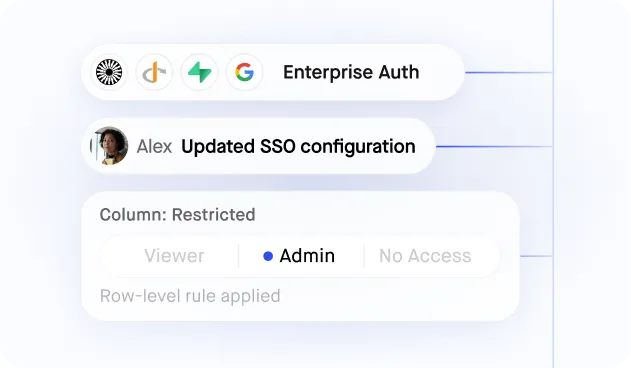
Create separate views and permission sets for warehouse staff (view/update stock levels), ops managers (full CRUD plus reports), and external suppliers (view their own orders only) — all running off the same dataset with zero data duplication.
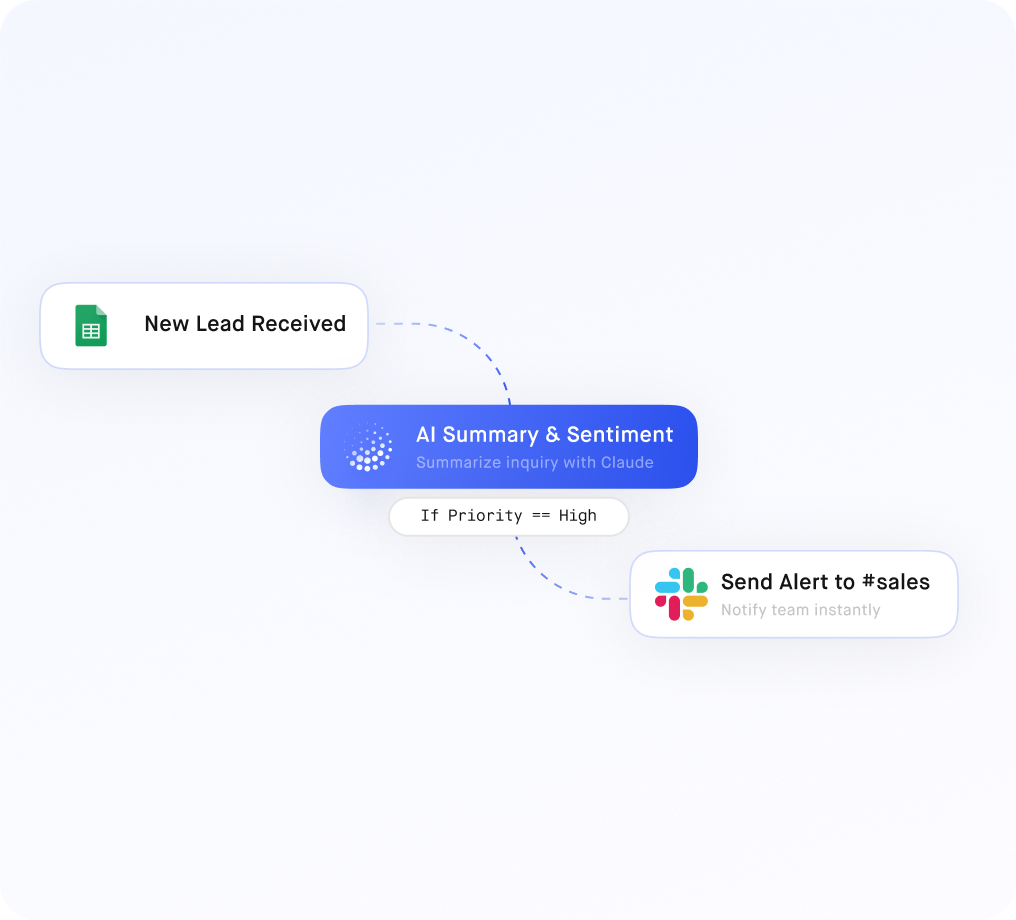
Real-Time Low Stock Alerts and Reorder Triggers
Set threshold-based alerts on any field in your inventory database. When stock falls below the defined level, trigger automated notifications to procurement — directly from your data, without building a separate alerting pipeline.
.jpeg)
SQL-Powered Search and Filtering at Scale
Jet Admin's query builder lets your team filter and search inventory across millions of SKUs using the full power of your SQL database. No limits on catalog size, no slow API calls — just fast, direct database queries with a clean UI.
Similar Use Cases
No items found.


.png)











.png)





.svg-min.png)



















.png)












Frequently asked questions
What is fixed asset management software?
Software that maintains the capital asset register: what was bought, what it cost, how it is depreciating and what it is worth now. It is a finance record first and a physical one second.
How is this different from asset tracking?
Asset tracking answers where something is. Fixed asset management answers what it is worth and how it is being written down. Most organisations need both, and the mistake is expecting one system to serve a controller and a warehouse supervisor equally.
Does it handle depreciation schedules?
Yes, with the methods and lives your finance team already applies, held on the asset rather than recalculated in a spreadsheet each period.
Can it track disposals and part disposals?
Yes, with the gain or loss calculated against net book value and the whole movement logged for the audit file.
Will it satisfy an auditor?
Additions, disposals, transfers and revaluations each carry a timestamp and a named user. That trail is usually what the audit actually tests, rather than the closing balance itself.