Key Takeaways
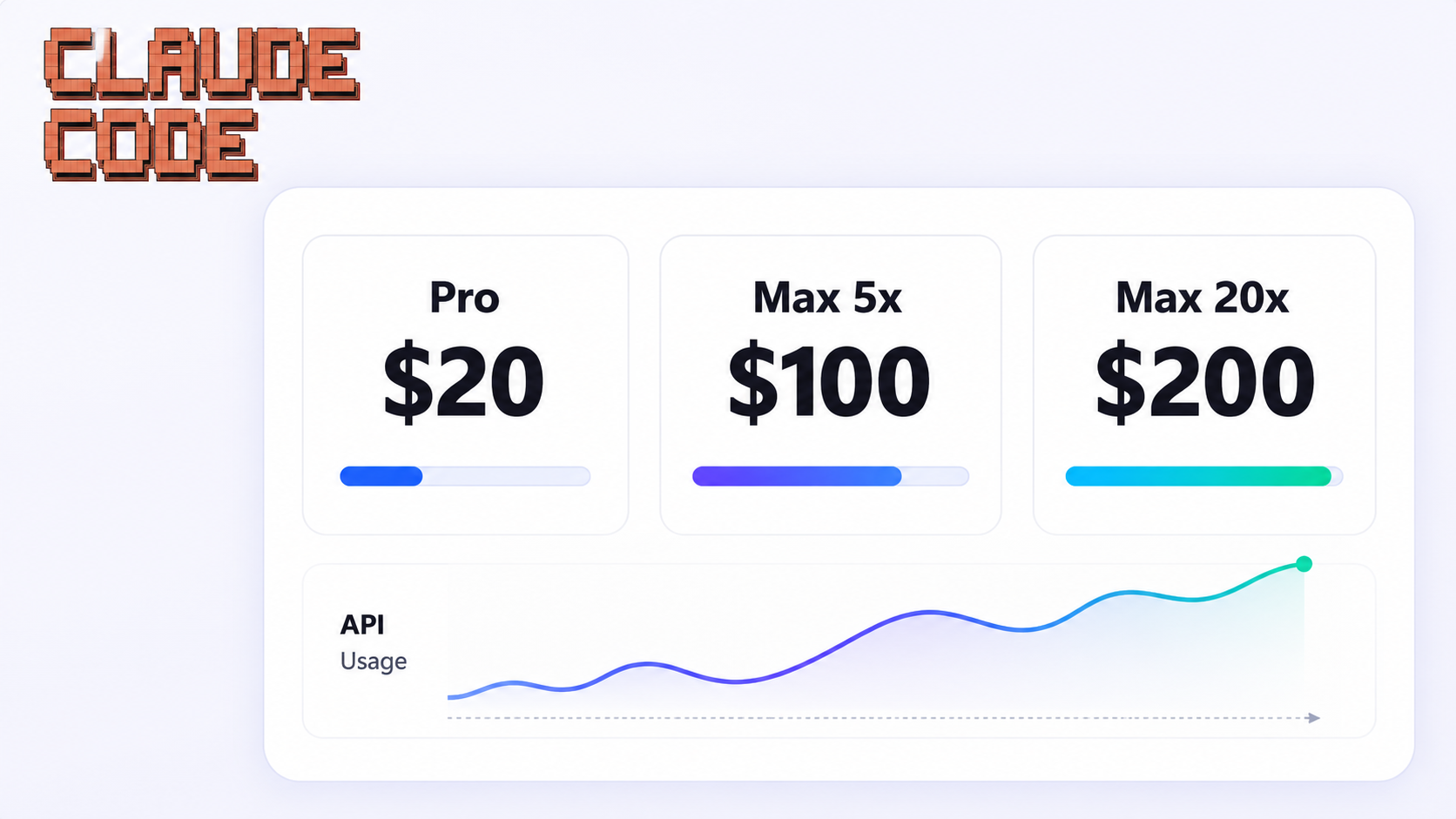
- As of September 2026, claude code pricing is bundled into Claude Pro ($20/month), Max 5x ($100/month), Max 20x ($200/month), Team and enterprise plans, or pay-as-you-go API. There is no standalone Claude Code price and no reliable free tier for the CLI.
- Heavy, daily claude code usage is usually cheaper on Max subscriptions, while low or irregular usage often costs less via API-especially with prompt caching and Batch API discounts.
- Enterprise pricing depends on seats, token volume, deployment method (direct API vs AWS/Azure), and governance needs such as SSO, audit logs, and enterprise search integrations.
- Jet Admin is relevant when your real goal is to ship secure internal AI apps on top of Claude (with governance and app logic), not just to give developers a coding agent in the terminal.
Introduction: What Claude Code Pricing Looks Like Today (September 2026)
Claude Code acts as a terminal-based agent that can read, write, and execute code directly in your development environment. Its pricing is not sold separately. Instead, Claude Code is available through subscription plans and API pay-per-token billing-tied to the same Claude user plans (Free, Pro, Max, Team, Enterprise) and the Anthropic API.
Pricing re-checked against Anthropic's pricing page in September 2026. Always confirm on claude.ai and provider consoles before purchase.
In this article, "Claude Code" covers the terminal/CLI tool, Claude Cowork coding agent features in the Claude app, and programmatic code-related usage via API and Batch API. Your total cost depends on subscription tier, token usage across models like Sonnet and Opus, whether you use managed agents or code execution, and where you run Claude.
For organizations whose goal is governed business apps rather than a coding assistant, Jet Admin offers a secure AI app builder that can orchestrate Claude-powered agents and workflows on top of existing data, databases, and APIs.
Claude Code Pricing at a Glance (Plans, Seats, and API)
Every path to Claude Code runs through one of the following plans or the API. Here is the current landscape.
Plan / Channel | Price & Billing Basis | Claude Code / Cowork Access | Included Usage & Limits | Best For |
|---|---|---|---|---|
Free | $0 | No CLI access; chat and basic desktop generate code only | Shared rolling limits; limited models | Testing Claude chat, not coding workflows |
Pro | $20/month, or $17/month billed annually | Full Claude Code and Claude Cowork | ~5x free tier usage per 5-hour window; Sonnet and Opus access | Solo devs, small-to-medium repos |
Max 5x | $100/month | Full access; model selection | ~5x Pro usage per window; priority access during peak | Regular daily coding, larger codebases |
Max 20x | $200/month | Full access; best capacity | ~20x Pro usage per window; fewest interruptions | All-day power users, multi-agent workflows |
Team (Standard) | $20/seat/month annually, $25 monthly | All Claude features, more usage than Pro | Closer to Pro capacity; central billing | Org members needing claude chat and documents access |
Team (Premium) | $100/seat/month annually, $125 monthly | Full Claude Code and Cowork | Closer to Max capacity; admin controls | Dev teams needing coding agents + governance |
Enterprise | Annual contract, 20+ seats | All seats include Claude Code | Usage billed at API rates; 500K+ context; governance features | Regulated orgs, large-scale deployments |
API Only | Pay as you go per token | Via API key; no subscription UI | No monthly minimum; per-MTok rates | CI/CD integration, SaaS products, spiky usage |
Pro is the entry point for individual Claude Code access. Max tiers serve intensive solo use. Team plan introduces seat-based pricing and central billing. Enterprise adds stronger governance, custom pricing, and larger context windows. Exact token quotas change over time and by geography, so this article focuses on relative capacity and cost drivers rather than hard numeric ceilings.

How Claude Code Pricing Actually Works Under the Hood
Claude Code is a feature on top of Claude's subscription and API products, not a separate line item. Your coding sessions draw from the same token budget as regular claude usage, claude chat, and agent interactions. Conversations create files, diffs, and tool calls-all metered from one pool.
Here is how subscriptions work:
- Each paid plan includes a fixed monthly fee per user with rolling 5-hour usage windows, weekly caps, and shared token pools for chat, Claude Code, claude code sessions, Claude Cowork, and design or research modes.
- Token usage drives claude code pricing based on input and output text processed. A token is roughly 4 characters or 0.75 words, and input tokens (your code, prompts, context) plus output tokens (responses, diffs) are counted together.
- The CLI authenticates using the same account and existing claude plan as Claude web or desktop, or an API key if you are using the programmatic interface.
- Subscription plans include a fixed monthly fee with usage limits. Features like remote mcp extended thinking, web memory, and research ability are available depending on the tier and model.
For enterprise plans, seat fees (per-user access to Claude apps) are often separated from usage fees (tokens metered at API rates behind central billing and admin controls). This distinction matters when budgeting for large teams with uneven usage patterns.
Is There a Free Claude Code Plan?
As of September 2026, there is no reliable, always-on free Claude Code CLI plan. The free plan provides Claude chat on web, iOS, Android, and desktop without terminal access.
What the free tier does include:
- Chat with Claude models on web and mobile, desktop extensions, and basic code generation inside the chat interface.
- Possibly limited code execution in the sandbox-but not the full Claude Code terminal experience or ability to execute code unlock advanced workflows.
- Access to a subset of claude features and more claude models at reduced capacity.
New api accounts sometimes receive small free credits that can fund a handful of Claude Code–style API sessions, but these are intended for evaluation, not ongoing development. Anthropic has experimented with shifting where Claude Code and Claude Cowork live between Pro and Max tiers, so double-check the claude.ai pricing page before assuming CLI access is included in any entry plan.
For any serious or recurring claude code usage, budget at least for Pro or API credits. The free tier is best treated as a way to test Claude's general coding skills in chat, not to run continuous coding agents.
Claude Code on Pro vs Max: Which Subscription Tier Should Developers Pick?
The Pro and Max tiers are the main options for individual developers. The Pro plan costs $20 per month for individual developers and covers light-to-medium daily use. Max 5x plan costs $100 per month, and the Max 20x plan costs $200 per month-designed for heavy, all-day claude code sessions.
Pro plan highlights:
- $20/month, or $17/month billed annually ($200 up front), which saves $40 a year compared to monthly billing.
- Full Claude Code and Claude Cowork on terminal, web, and desktop. Access to Sonnet and Opus models. Unlimited projects within usage limits.
- Pro plan users access approximately 44,000 tokens per 5-hour period. The Pro plan is suitable for small-to-medium codebases-think a few focused hours per day on a single service or repo.
- A typical claude code session can consume 10,000 to 100,000+ tokens depending on complexity.
Max plan highlights:
- Max 5x plan offers 5x Pro usage for $100 per month. Max 5x plan offers approximately 88,000 tokens per 5-hour window.
- Max 20x plan provides 20x Pro usage for $200 per month, with priority access during peak demand.
- Claude Code supports large context windows for handling complex projects-up to 1 million tokens on higher tiers-making Max plans ideal for large repositories and multi-agent workflows.
- Max plans are best for developers hitting Pro limits regularly. Running claude code continuously on big projects will hit walls on Pro.
Rule of thumb:
- Light solo dev → Pro
- Full-time individual engineer or consultant → Max 5x
- Power users running Agent Teams and big refactors → Max 20x (the claude max tier)
Team and Enterprise Pricing for Claude Code (Seats, Central Billing, and Governance)
Organizational pricing shifts from single-user plans to seat-based Team and Enterprise offerings, where Claude Code is usually gated behind higher seat types.
Team plans:
- Team plans start at $20 per seat per month billed annually ($25 monthly) for Standard seats, which Anthropic describes as all Claude features with more usage than Pro.
- Premium seats ($100 per seat per month billed annually, $125 monthly) include Claude Code and Cowork with 5x the usage of a Standard seat. Organizations can mix Standard and Premium seats to manage cost.
- Central billing covers all users. The admin console adds SSO, basic auditing, and integrations. Desktop extensions connect Slack, Microsoft 365, and google workspace services integrate with the broader org workflow, making adoption easier.
Enterprise plans:
- Enterprise is priced at $20 per seat per month plus usage billed at API rates, so cost scales with model choice and volume. All Enterprise seats include Claude Code. The self serve enterprise option allows teams to start without a custom contract, while larger deployments negotiate enterprise pricing directly.
- Usage is billed at API rates on top of the seat price. Claude science access, tasks early access features, and early access to newer capabilities are often bundled for enterprise accounts.
- Advanced governance: SCIM, granular permissions, audit logs, local session logs, enterprise search connectors, and options to scope Claude Code and managed agents within compliance boundaries.
Jet Admin's enterprise offering can complement or replace pure Claude Enterprise use when organizations want governed, Claude-powered internal apps with role-based permissions, audit trails, and deployment options-rather than giving every developer a separate claude instance with a coding agent seat.
Claude Code API Pricing: Real-Time, Prompt Caching, and Batch API
The Claude API is priced per million input tokens and million output tokens, with rates varying by model, region, and optimization features. API pricing charges per token with no monthly minimum.
Base model pricing (as of September 2026):
- Sonnet 5 costs $2 per million input tokens and $10 per million output tokens.
- Opus 5 is priced at $5 per million input tokens and $25 per million output tokens, 2.5x Sonnet 5 on both input and output.
- Fable 5.1, Anthropic's model for long-running agents, costs $10 input and $50 output per MTok.
- Older models stay available at their original rates, for example Sonnet 4.6 at $3/$15 and Opus 4.6 at $5/$25 per MTok.
- Haiku 4.5 is the budget option at $1 input / $5 output per MTok.
- Specifying US-only inference adds a premium to token prices (typically a ~1.1x multiplier).
Prompt caching:
- When long-lived claude code sessions work over the same repo, they generate large volumes of cache reads on repeated context.
- Cache reads cost 10% of the standard input price, meaning fresh input tokens that hit the cache are dramatically cheaper.
- Prompt caching can reduce costs by up to 90% for workloads with stable system prompts and repeated context (like a CLAUDE.md file or repo structure).
- Cache write costs are higher than standard input but pay for themselves quickly across multiple requests.
Batch API:
- The batch api offers roughly a 50% discount versus standard real-time API rates.
- Suitable for overnight code analysis, documentation generation, or static refactors where latency tolerance is high.
- Results are typically returned within 24 hours. Ideal for reducing api costs on non-interactive coding tasks.
For Claude Managed Agents and code execution features, tokens are still billed at model rates, but additional charges may apply for web search ($10 per 1,000 searches) or external tools. Enterprise buyers should request detailed rate cards.

What Actually Drives Your Total Claude Code Cost?
List price is only the starting point. Real spend is driven by usage patterns, codebase size, and governance needs.
Primary cost drivers:
- Number of developers/seats: Each seat on a Max plan or Premium Team seat multiplies the base cost. Running multiple claude code instances across a team adds up fast.
- Hours of actual usage per day: API users typically spend $6 per developer per day on average, but power users can far exceed this. Running claude code continuously on complex tasks drives spend higher.
- Model mix: Using Opus 5 for every task costs 2.5x more on input and output tokens than Sonnet 5. Model selection affects the cost of running Claude Code due to token consumption. Reserve advanced claude models for complex reasoning.
- Context window size: Working with extensive context increases costs in claude code usage. Using larger repositories increases token consumption in Claude Code because each prompt carries more input tokens. Constantly refilling the context window with fresh input means paying full input rates, while leveraging an existing own context window with caching is far cheaper.
- Multi-agent workflows: A 3-agent team uses roughly 7x more tokens than a single agent. Agent Teams can use roughly 7x more tokens than a single-agent session, so limit parallelism to cases where it pays off.
Environment and deployment:
- Direct API vs Claude on AWS Bedrock vs Microsoft Azure Foundry can mean different billing units and potential multipliers.
- Support level and governance (SSO, SCIM, enterprise search connectors, audit logging, custom SLAs) are baked into enterprise contract pricing-raising total cost but lowering risk.
Subscription vs API: When Is Each Cheaper for Claude Code Usage?
The core tradeoff is straightforward: subscriptions cap your monthly spend and simplify budgeting, while API pay as you go is more precise but can spike for heavy daily users.
Three usage profiles:
- Light user (occasional bug fixes, mostly Sonnet, a few sessions per week): API with prompt caching keeps costs under $30/month. Pro might be cheaper if sessions are frequent enough.
- Medium user (daily multi-file sessions, mix of Sonnet and Opus, writing code several hours per day): Pro plan costs $20/month while Max plans range from $100 to $200-compare this against the API equivalent. The max 5x plan is often the sweet spot.
- Heavy user (all-day Opus, multi-agent workflows, large repos): At heavy usage, subscription plans are cheaper than API rates. A Max 20x user reported API-equivalent usage worth $4,900+ in a burst month, far exceeding the $200 subscription price.
Estimating API-equivalent cost:
- Approximate average tokens per session, multiply by sessions per day and working days per month, then apply current MTok rates including prompt caching.
- Subscription plans are more cost-effective for continuous usage than API billing. The break-even for Max 5x typically falls around 15–20 heavy sessions per month.
Enterprise contracts often blend both: per-seat Claude apps for interactive use through a max plan, plus discounted api account commitments and api credits for back-end automation and internal tools.
How to Control and Optimize Claude Code Spend
Most cost levers live inside your workflow: how you prompt, what models you choose, and whether you design sessions for reuse or treat each as a one-off.
Practical tactics:
- Prefer Sonnet by default and reserve Opus for complex reasoning. This alone can cut token costs by 40% or more.
- Use plan mode or equivalent structured workflows before running large auto-accept refactors. Scoping tasks tightly avoids loading unnecessary context.
- Reset context between unrelated tasks. Dragging old files into every prompt wastes the same token budget on irrelevant input and output tokens.
- Limit Agent Teams to cases where parallelism truly pays off-remember, three parallel agents consume roughly 7x the tokens of one.
- For API workloads, batch low-priority jobs via the Batch API and design prompts to maximize cache hits with stable system prompts and CLAUDE.md files.
- Claude Code includes advanced capabilities like tool connection and GitHub integration. Use these to create content ability around structured, repeatable workflows rather than ad-hoc exploration.
Governance and monitoring:
- Use organizational dashboards and per-user spend caps to catch runaway usage, especially when enabling Claude Code, Claude Cowork, and managed agents across teams.
- Track own usage per developer and compare against the team's baseline to identify outliers.
Quick evaluation workflow: Start on Pro or API with small limits. Log real token consumption across 1–2 weeks of typical development. Extrapolate break-even points versus Max and enterprise options.
Where Jet Admin Fits: When You Need More Than Just Claude Code
Built something with Claude Code? You still need an admin panel for it. Jet Admin connects to your database in 5 minutes.
.png)
Jet Admin is not a Claude competitor. It is a secure AI app builder that sits on top of Claude models and other LLMs to build internal tools, dashboards, and AI agents on your existing data.
What Jet Admin does:
- Connects to databases, APIs, spreadsheets, and SaaS tools to visualize data write logic, and deploy production-ready internal apps.
- Generates front-end UI and application/backend logic. Supports prompt-based app building, MCP/coding-agent workflows, and importing existing React code.
- Deploys to end users with role-based permissions and audit logging-governance built in, not bolted on.
Claude Code vs Jet Admin:
- Claude Code is optimal as a primary development tool for individual developer productivity inside a repo-it excels at writing code, debugging, and refactoring.
- Jet Admin is for shipping governed multi-user business apps that may internally call Claude (via API) for reasoning, enterprise search, or automation under centralized controls.
How Claude costs show up in a Jet Admin deployment:
- Jet Admin subscription plus Claude API usage. Centralizing Claude calls inside Jet Admin agents can reduce overall consumption by sharing context and flows across users, instead of equipping every person with a separate Max plan.
If you are evaluating long-term operating cost, consider whether you truly need more Claude Code seats, or a governed platform like Jet Admin to encapsulate AI workflows and manage spend across teams.

Decision Guide: Which Claude Code Pricing Plan Fits Your Team?
Here is a concise mapping of common scenarios to the right pricing path:
- Solo developer experimenting with coding agents: Start on Pro ($20/month) or an api account with small api credits. Evaluate your own usage patterns before committing to a higher tier.
- Freelance or agency developer doing daily project work: Consider Max 5x ($100/month). It handles regular claude code sessions across multiple projects without constant rate-limit interruptions.
- Deep-work engineer or researcher living in Claude Code: Max 20x ($200/month). The capacity handles all-day Opus sessions, multi-agent refactors, and large repos with big context windows.
- Small team (5–50 devs): Team plan with a mix of Standard and Premium seats. Give Premium seats to developers who need Claude Code daily; Standard seats for everyone else who only needs claude chat.
- Regulated enterprise: Enterprise with annual API commitment, strict governance, and custom pricing. Negotiate rate cards, volume discounts, and renewal terms.
When API-first is preferable:
- Building SaaS products that embed Claude, integrating into CI/CD pipelines, or handling highly spiky workloads better suited for pay as you go with prompt caching and the batch api.
When Jet Admin is a better or complementary fit:
- You need internal tools and AI apps on top of production data with centralized permissions, audit trails, and app logic generation. You want to treat Claude as one of several back-end AI services, not as every employee's primary tool.
Validate latest Claude and API prices on claude.ai. Measure real token usage on a trial. Compare this with app-building options like Jet Admin before finalizing a long-term contract.
FAQ
These FAQs address common claude code pricing and deployment questions not fully covered above.
Does Claude Code Pricing Differ by Region or Currency?
Claude subscription prices (Pro, Max, Team) are listed in local currencies on claude.ai by region but anchored to USD-equivalent values that shift with exchange rates and local tax. Always check your regional pricing page for final amounts. Claude API, AWS Bedrock, and Microsoft Foundry often apply small geographic multipliers (typically 1.1x) when choosing US-only or specific regional inference, affecting all token charges including prompt caching and batch api costs. Enterprise contracts may specify custom rates by region, and centralized procurement should align geography choices with compliance and budget constraints.
Can We Run Claude Code or Claude Models Fully On-Premises?
As of July 2026, Anthropic's Claude models-including those powering Claude Code and Claude Cowork-are delivered as cloud services (Claude API, AWS Bedrock, Azure Foundry), not shipped as on-prem model weights. Enterprises wanting stricter control typically deploy private network links (VPC peering, PrivateLink) to Claude endpoints and centralize access through internal tools platforms or products like Jet Admin. Cost and api pricing remain usage-based: you still pay per token or via committed enterprise contracts, even if access is locked behind your own infrastructure.
How Do Central Billing and Spend Limits Work for Claude Code in Organizations?
Team and enterprise plans centralize billing through one organization account that receives invoices for all seats and API usage, simplifying procurement. Admins can assign seat types (Standard vs Premium) and enable or disable Claude Code and Claude Cowork for specific users, allowing fine-grained cost control. Enterprise offerings add per-user or per-workspace spend caps, usage dashboards, and API keys scoped to specific projects so finance teams can monitor and cap claude code costs effectively.
Can We Mix Claude Max Subscriptions With Direct API Usage in One Company?
Many organizations do exactly this. Developers may have Pro or max plan seats for interactive Claude Code and Cowork sessions, while backend services call Claude via shared or service-specific API keys. This hybrid approach works when interactive usage is predictable (suited to flat-fee seats) but automated workloads are variable (suited to pay as you go or committed API volumes). Governance platforms like Jet Admin can route application traffic through controlled API keys, improving observability and potentially qualifying for better-negotiated enterprise discounts.
How Often Does Claude Pricing Change and How Should We Plan Contracts?
Over 2025–2026, Anthropic has introduced new models and promotional pricing windows (for example, lower introductory MTok rates through specific dates like August 31, 2026), and has shifted which features are bundled into Pro vs Max tiers. Buyers running critical workloads should negotiate 1–3 year enterprise agreements with clear rate cards, volume discounts, and renewal terms rather than relying on public list prices. Teams building multi-year internal applications on Claude-potentially via Jet Admin-should factor in both model evolution and likely price normalization after introductory periods when modeling total cost of ownership.
If your goal is to ship governed internal apps rather than equip every developer with an individual Claude Code seat, explore Jet Admin to see how it centralizes Claude API usage, permissions, and deployment under one platform.