An Appian alternative must match the process, not just the form on its first screen. Case handling, role handoffs, exceptions, and integration ownership determine whether a lighter platform is suitable.
Quick answer: Mendix is worth evaluating for enterprise application development. OutSystems is worth evaluating for an enterprise application platform. Microsoft Power Apps is worth evaluating for applications in a Microsoft environment.
Published by Jet Admin. Product and pricing information checked September 26, 2026 against official pages and documentation. Recommendations are editorial judgments, not benchmark results or claims of hands-on product testing. List order reflects use-case fit, not a measured score.
Best Appian alternatives at a glance
| Product | Best fit | Main trade-off | Pricing model |
|---|---|---|---|
| Jet Admin | business apps on existing data | A custom business app requires deliberate data modeling and permission design; it is not a replacement for every specialist editor, database service, or collaboration suite. | Free and paid plans with AI credits. Granular permissions, SSO, and audit logs are listed under Business; on-premise deployment is Enterprise. |
| Mendix | enterprise application development | Implementation skills, lifecycle management, and procurement matter. Use an application portfolio and governance requirements to compare scope. | Enterprise-oriented platform plans; request current terms for applications, users, and deployment. |
| OutSystems | an enterprise application platform | Plan for implementation expertise and platform governance. A large platform can be disproportionate for a small isolated workflow. | Commercial platform pricing; scope the application estate, usage, support, and implementation. |
| Microsoft Power Apps | applications in a Microsoft environment | Licensing and connector entitlements need careful mapping. Do not assume an existing Microsoft 365 subscription covers every production scenario. | Plan and usage licensing depend on the app, users, connectors, and services involved. |
| Quickbase | shared operational applications and project data | Validate customization, integration volume, and reporting with real data. Platform adoption requires ownership of the shared model and process. | Commercial user-based plans and enterprise arrangements; check minimum commitments and extra capabilities. |
| Budibase | requests and operational workflows | Check cloud versus self-hosted capabilities and the operational work required. Validate the full process rather than only the initial form. | Cloud creator/end-user offers and a self-hosted option have different allowances and terms. |
What is Appian, and why consider alternatives?
Combine process automation and applications around work that crosses teams and systems. It is particularly relevant when case handling and process orchestration drive the decision.
Start with the Appian official product information and identify which of these requirements applies to your team:
- Separate process orchestration from app UI
- Document exception paths and audit requirements
- Assess implementation scope and specialist skills
When Appian is still the right choice
Keep Appian when its process model and organizational investment fit the program. A simpler app builder may not replace a complex case-management system.
Types of Appian alternatives
Enterprise low-code decisions involve operating models as well as screens. A departmental app and a cross-company process with formal governance may need different platforms. Compare the full implementation and support model before interpreting a lower subscription as a lower total cost.
What to look for in a Appian alternative
- Can the platform represent the full process, including exceptions and reassignment?
- Can identity, access, audit, and deployment requirements be demonstrated?
- How are development, testing, and production separated?
- Can your own team maintain the application after an implementation partner leaves?
- What do licenses, infrastructure, implementation, and long-term support cost together?
1. Jet Admin: best for business apps on existing data
Build interfaces over databases and APIs, with forms, tables, and workflows that let a team act on records. This is useful when the problem is a customer portal, an approval queue, or an operational app rather than another document.
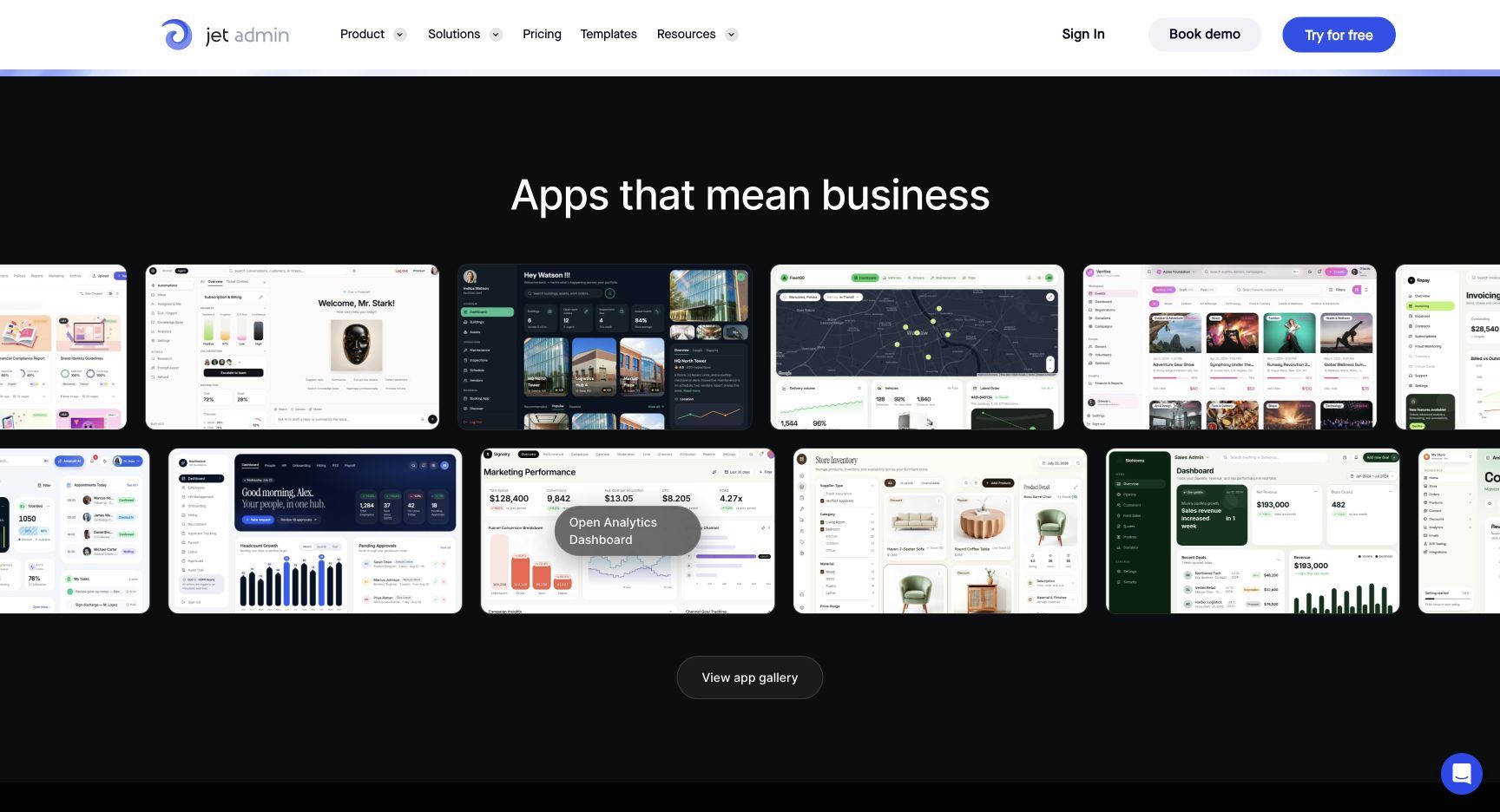
Why consider it: Consider Jet Admin if your reason for leaving Appian centers on business apps on existing data. Have a manager approve a request while another user can access only their own records.
Trade-off: A custom business app requires deliberate data modeling and permission design; it is not a replacement for every specialist editor, database service, or collaboration suite.
Pricing: Free and paid plans with AI credits. Granular permissions, SSO, and audit logs are listed under Business; on-premise deployment is Enterprise. Check current pricing and plan details.
Choose it when: Your priority is business apps on existing data. Before committing, ask the prospective owner to complete the evaluation task and explain what they would maintain after launch.
Source: Jet Admin official product information.
2. Mendix: best for enterprise application development
Evaluate a low-code platform for building and managing business applications across an organization. It suits teams selecting a development platform rather than a single departmental tool.
Why consider it: Consider Mendix if your reason for leaving Appian centers on enterprise application development. Pilot one application through development, review, deployment, and an operational change.
Trade-off: Implementation skills, lifecycle management, and procurement matter. Use an application portfolio and governance requirements to compare scope.
Pricing: Enterprise-oriented platform plans; request current terms for applications, users, and deployment. Check current pricing and plan details.
Choose it when: Your priority is enterprise application development. Before committing, ask the prospective owner to complete the evaluation task and explain what they would maintain after launch.
Source: Mendix official product information.
3. OutSystems: best for an enterprise application platform
Build and operate business applications using a platform intended for enterprise development and lifecycle management. It is relevant when the program spans more than a few forms or dashboards.
Why consider it: Consider OutSystems if your reason for leaving Appian centers on an enterprise application platform. Deliver one end-to-end application and assess release management and maintainability.
Trade-off: Plan for implementation expertise and platform governance. A large platform can be disproportionate for a small isolated workflow.
Pricing: Commercial platform pricing; scope the application estate, usage, support, and implementation. Check current pricing and plan details.
Choose it when: Your priority is an enterprise application platform. Before committing, ask the prospective owner to complete the evaluation task and explain what they would maintain after launch.
Source: OutSystems official product information.
4. Microsoft Power Apps: best for applications in a Microsoft environment
Create business apps in the Power Platform ecosystem. It is a natural shortlist choice when Microsoft identity, data services, and organizational tooling already shape the architecture.
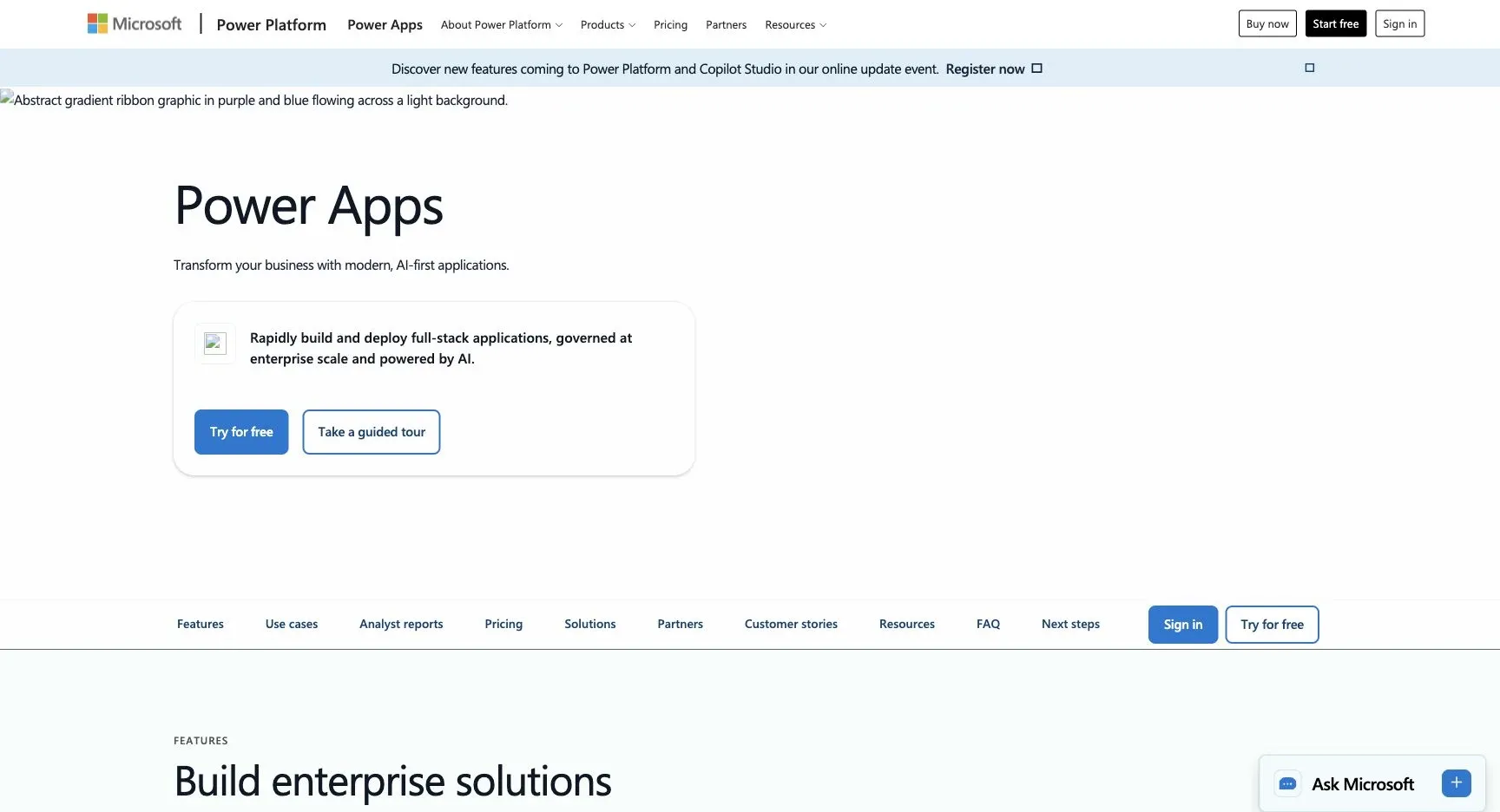
Why consider it: Consider Microsoft Power Apps if your reason for leaving Appian centers on applications in a Microsoft environment. Prototype an app using the intended connectors and verify licensing with the actual user roles.
Trade-off: Licensing and connector entitlements need careful mapping. Do not assume an existing Microsoft 365 subscription covers every production scenario.
Pricing: Plan and usage licensing depend on the app, users, connectors, and services involved. Check current pricing and plan details.
Choose it when: Your priority is applications in a Microsoft environment. Before committing, ask the prospective owner to complete the evaluation task and explain what they would maintain after launch.
Source: Microsoft Power Apps official product information.
5. Quickbase: best for shared operational applications and project data
Coordinate operational work using connected business applications and structured data. It is useful when teams need a common system for timelines, resources, approvals, and handoffs.
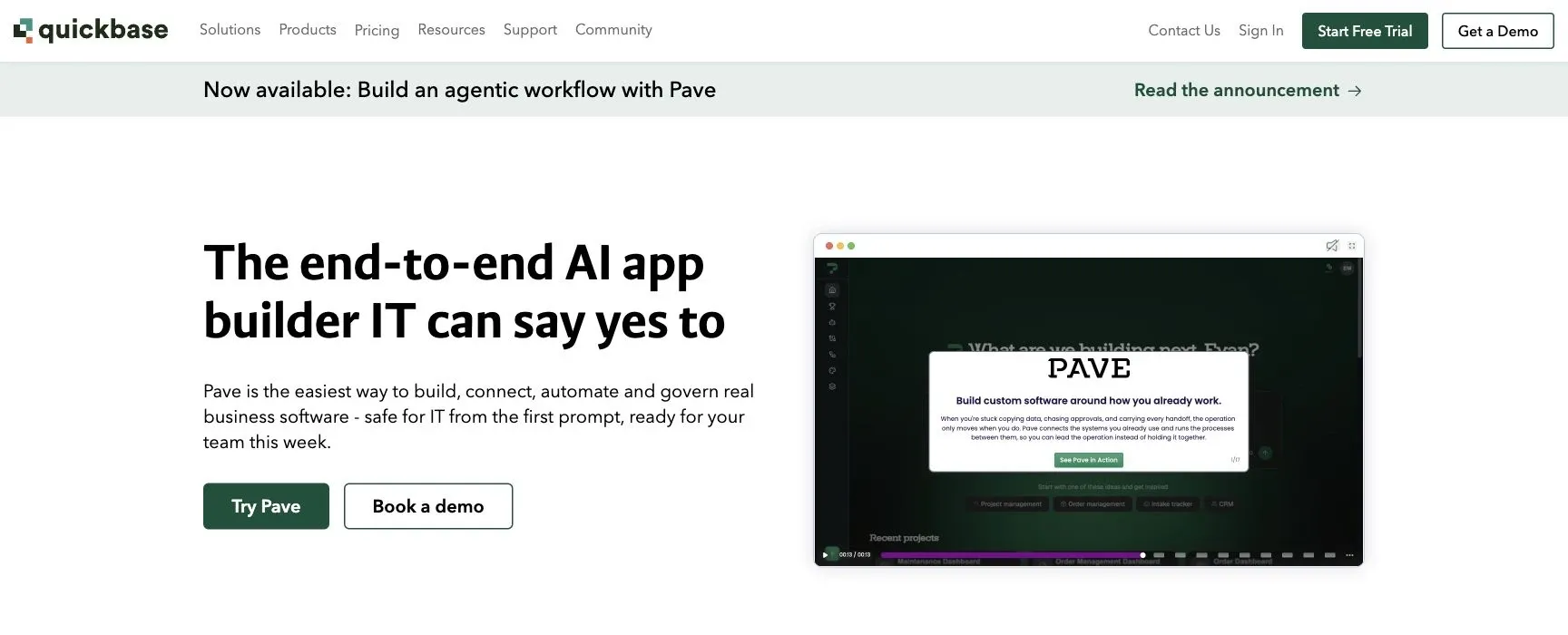
Why consider it: Consider Quickbase if your reason for leaving Appian centers on shared operational applications and project data. Model a project, its resources, and an approval, then build a consolidated view.
Trade-off: Validate customization, integration volume, and reporting with real data. Platform adoption requires ownership of the shared model and process.
Pricing: Commercial user-based plans and enterprise arrangements; check minimum commitments and extra capabilities. Check current pricing and plan details.
Choose it when: Your priority is shared operational applications and project data. Before committing, ask the prospective owner to complete the evaluation task and explain what they would maintain after launch.
Source: Quickbase official product information.
6. Budibase: best for requests and operational workflows
Build apps and automations around requests, approvals, and connected business systems, with open-source and managed options.
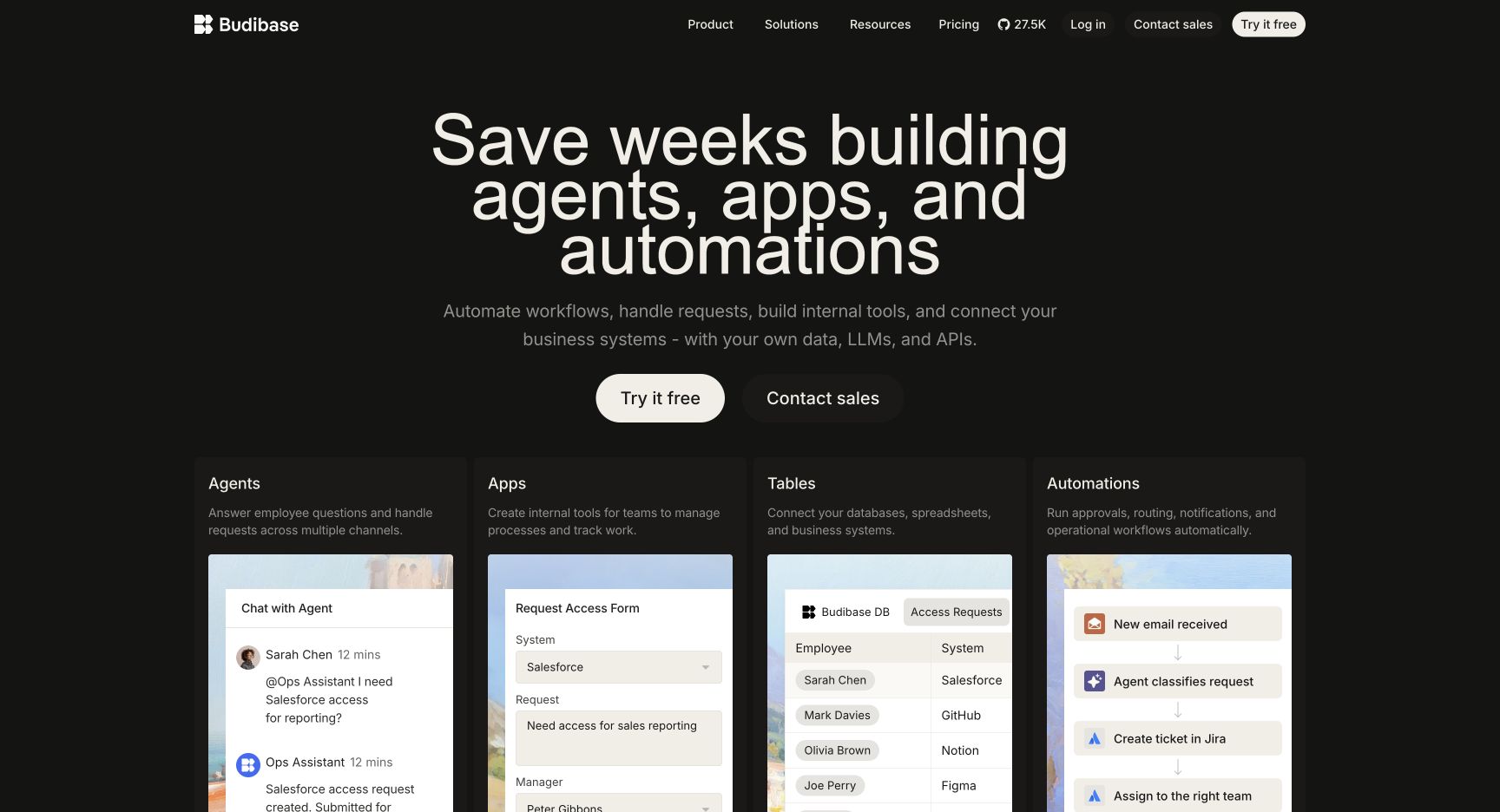
Why consider it: Consider Budibase if your reason for leaving Appian centers on requests and operational workflows. Run a request from submission through review, record update, and notification.
Trade-off: Check cloud versus self-hosted capabilities and the operational work required. Validate the full process rather than only the initial form.
Pricing: Cloud creator/end-user offers and a self-hosted option have different allowances and terms. Check current pricing and plan details.
Choose it when: Your priority is requests and operational workflows. Before committing, ask the prospective owner to complete the evaluation task and explain what they would maintain after launch.
Source: Budibase official product information.
Which Appian alternative should you choose?
Mendix is worth evaluating for enterprise application development. OutSystems is worth evaluating for an enterprise application platform. Microsoft Power Apps is worth evaluating for applications in a Microsoft environment.
Run this proof of concept: Run a case through intake, review, escalation, and closure, including missing data and a failed integration.
Record what worked, what required custom work, which plan unlocked essential capabilities, and who can maintain the result. Compare the full monthly operating cost and the one-time migration effort. A successful demonstration is only useful if it covers the difficult permissions, exception, and maintenance requirements.
Keep Appian when its process model and organizational investment fit the program. A simpler app builder may not replace a complex case-management system.
How to move from Appian
Map process definitions, records, decisions, documents, and human tasks. Move a bounded workflow and establish a fallback for in-flight cases.
- Inventory the data, attachments, integrations, owners, and access rules that the replacement must preserve.
- Separate transferable records from screens, formulas, workflows, and authentication behavior that need rebuilding.
- Use a limited pilot with representative records and explicit success criteria before switching the entire team.
- Reconcile record counts and key business outcomes, train the next owner, and document the fallback path.
Keep the existing system available during the pilot where your contract and technical setup permit it. Avoid simultaneous uncontrolled writes to two systems. Agree on a cutover owner and a rollback decision before the final move.
FAQs about Appian alternatives
What is the best Appian alternative?
Mendix is worth evaluating for enterprise application development. OutSystems is worth evaluating for an enterprise application platform. Microsoft Power Apps is worth evaluating for applications in a Microsoft environment. There is no single winner across these use cases; choose the option that passes the representative test above.
Is a free alternative enough?
It can be for a limited workflow. Compare the published free-plan or open-source terms with the required users, usage, hosting, integrations, and governance. A trial is not a permanent free plan, and self-hosted software still needs infrastructure and maintenance.
Can I move everything without rebuilding?
Map process definitions, records, decisions, documents, and human tasks. Move a bounded workflow and establish a fallback for in-flight cases.
How should I compare the real cost?
Use the same representative workload and the same access requirements for every vendor. Add subscriptions, usage charges, hosting or backend costs, migration work, and ongoing maintenance. Check which plan includes the required feature before comparing headline prices.
Is Jet Admin a direct Appian replacement?
It can replace the operational application part when business apps on existing data is the goal. It will not reproduce every specialist feature of Appian. Test the data model, permissions, integrations, and daily user workflow before deciding.
Put the shortlist to work
Run a case through intake, review, escalation, and closure, including missing data and a failed integration. If that exercise reveals a need for a human-facing operational app, explore Jet Admin’s process automation use case and check the workflow against your own data and access requirements.