
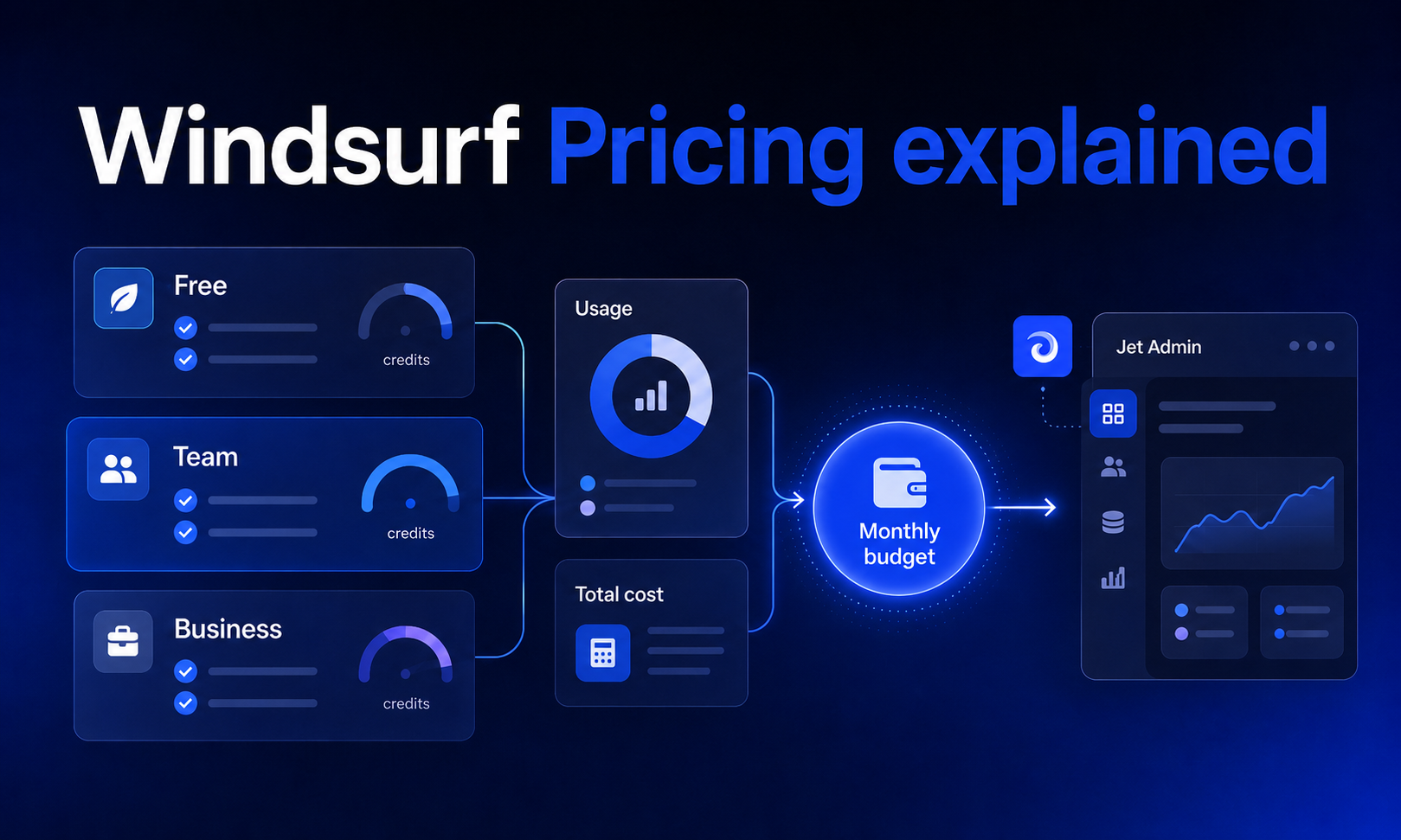
Current Windsurf Pricing Summary
Windsurf AI offers four pricing plans as of July 2026: Free, Pro, Teams, and Enterprise. Here is what each windsurf plan costs right now, verified this month.
Plan | Price | Included Credits | Best For |
|---|---|---|---|
Free | $0/month | 25 credits/month | Evaluation, hobby projects |
Pro | $20/month | 500 credits/month | Solo developers, freelancers |
Teams | $40/user/month | Credits per seat + admin tools | Small teams needing centralized billing |
Enterprise | $60/user/month | Custom allocation + compliance | Enterprise teams in regulated industries |
The free plan includes 25 credits per month and unlimited tab completions. Pro plan users receive 500 credits per month for $20, giving most developers a solid foundation for daily AI-assisted coding. The team plan adds centralized billing, usage analytics, and admin analytics for development groups. Enterprise customers get advanced security, access control features, SSO/SCIM, RBAC, and custom deployment options.
Windsurf credits are consumed based on model usage, meaning your actual monthly cost depends heavily on which models you use and how intensively you run agentic workflows. The SWE-1 Lite model costs 0 credits on all plans-making basic AI interaction effectively free-while premium models like Claude Sonnet 4.6 costs 90 credits per 1M input tokens.

Why Understanding Windsurf Pricing Matters
The windsurf pricing structure looks straightforward on the surface, but credit consumption varies dramatically between native SWE models and third-party models. A developer who exclusively uses proprietary models like SWE-1 or SWE 1.5 will stretch their monthly allocation far further than someone regularly calling frontier models like Claude, GPT-5, or Gemini.
Here's why pricing literacy matters before you commit:
- Daily and weekly quota limits replaced the old credit system's monthly pool in March 2026. The new system refreshes usage on daily and weekly cycles rather than giving you a single monthly credits bucket to burn through. This change affects how heavy users pace their work.
- Tab completions are unlimited across all plans without consuming prompt credits. This means autocomplete-the feature most developers use hundreds of times daily-is effectively free on every windsurf plan, including the free tier.
- Overage costs can significantly increase your bill. Exceeding credit limits requires purchasing add-on credits. If you're a heavy AI user running multi-file editing sessions through Cascade, those add-on packs can push your dollar amount well beyond the plan price.
- Plan selection determines access to compliance certifications and enterprise features. If your organization needs HIPAA, FedRAMP, or data retention controls, only the Enterprise tier provides those capabilities-and the pricing reflects it.
What Makes Windsurf Pricing Different
Windsurf AI takes a distinct approach to AI coding tools pricing compared to alternatives like Cursor or GitHub Copilot.
Quota-based system with daily/weekly refresh cycles. Rather than handing you a monthly pool of credits and hoping you budget wisely, Windsurf's current pricing model spreads usage across daily and weekly quotas. This prevents the common problem where power users exhaust their allocation in the first week and sit idle until renewal.
Native SWE models cost fixed credits per prompt regardless of complexity. When you use Windsurf's proprietary models (SWE 1 and SWE 1.5), the credit consumption is predictable-a flat per-prompt cost. This contrasts with how third party models work, where billing is token-based and tied to the model provider's API price plus Windsurf's margin.
Third-party models billed at API rates converted to credits. Using models like Claude, GPT-4.x, or Gemini draws against your windsurf credits at rates reflecting the model provider's API pricing. Claude Sonnet 4.6, for example, costs 90 credits per 1M input tokens. This means your effective cost per AI interaction varies significantly by model choice.
Unlimited tab completions separate from agent-based Cascade pricing. Unlike competitors that meter every interaction, Windsurf keeps unlimited tab completions outside the credit system entirely. You only consume credits when using Cascade (agentic multi-step workflows), Chat, or premium models.
Student discounts available. Some reports indicate discounts are available with .edu email verification, though exact pricing details and feature access for student tiers require confirmation directly with Windsurf.
How Windsurf Billing Works
Understanding how billing actually works prevents surprises on your invoice.
Step 1: Choose your base plan with included monthly credit allocation. Select from Free (25 credits), Pro (500 credits), Teams, or Enterprise. Each paid plan includes a set number of credits per billing cycle. Annual billing reportedly saves approximately 17%, making it the practical choice for committed users.
Step 2: Monitor daily/weekly quota usage for Cascade and Chat features. Under the new system introduced in March 2026, your monthly allocation is distributed into daily and weekly quotas that refresh automatically. This means you can't accidentally burn 500 credits in a single marathon session-usage is paced. Free users get a lighter quota; Pro and above get standard or high quotas depending on the tier.
Step 3: Purchase add-on credits when quota is exceeded, or upgrade your plan. If you exhaust your included allocation, you can buy add-on credits. Under the previous credit system, extra usage was priced at roughly $10 for 250 credits. Under the current quota model, over-quota behavior may either throttle access until the next refresh or bill extra usage at API pricing rates. Some plans support automatic credit refills with spending controls to cap your maximum monthly spend.
Flat per-prompt vs. token-based billing: Free models and proprietary models (SWE-1, SWE 1.5) use flat-rate credit consumption per prompt. Third party models use token-based billing calculated against the model provider's API price, converted into windsurf credits. This dual pricing model means the same number of prompts can cost wildly different credit amounts depending on which model you select.
Complete Pricing Breakdown
Here's the comprehensive pricing breakdown for all Windsurf pricing plans:
Feature | Free | Pro | Teams | Enterprise |
|---|---|---|---|---|
Monthly Price | $0 | $20/mo | $40/user/month | $60/user/month |
Monthly Credits | 25 | 500 | Per-seat allocation | Custom |
Tab Completions | Unlimited | Unlimited | Unlimited | Unlimited |
Cascade Access | Limited | Full | Full | Full + priority |
SWE-1 Lite | 0 credits | 0 credits | 0 credits | 0 credits |
Premium Models | Limited | Claude, GPT, Gemini | Claude, GPT, Gemini | Full access |
Fast Context / Indexing | Basic | Deep | Deep | Deepest |
Cloud Agent Sessions | No | Yes | Yes | Yes |
Centralized Billing | - | - | Yes | Yes |
Usage Analytics | - | - | Yes | Advanced |
SSO / SCIM / RBAC | - | - | - | Yes |
Compliance (SOC2, HIPAA) | - | - | - | Yes |
Hybrid Deployment | - | - | - | Available |
Priority Support | - | - | Yes | Dedicated |
Credit allocation and add-on pricing
Pro plan includes 500 credits per month for $20. Exceeding credit limits requires purchasing add-on credits. Under the old credit system, packs were approximately $10 for 250 credits. Under the current quota-based model, overage pricing may follow API pricing structures for the specific model used.
Model access by tier
All plans include access to SWE-1 Lite at 0 credits. Paid plans unlock premium models including SWE 1.5, models like Claude (Sonnet 4.6 at 90 credits per 1M input tokens), GPT variants, and Gemini. Lower tiers may have restricted access to the most resource-intensive frontier models. The max plan (previously offered at $200/month for power users) may still be available as an upgraded option within the pricing structure for heavy AI users who need the highest quotas and most generous context windows.
Total cost drivers
Your real monthly cost depends on several factors beyond the plan price:
- Model selection: Using proprietary models keeps credit consumption low; switching to third party models like Claude or GPT multiplies costs
- Cascade intensity: Multi-file agentic workflows consume more credits per session than simple chat prompts
- Number of seats: Teams and enterprise customers pay per user month, so costs scale linearly with headcount
- Compliance and governance: Advanced security, data retention policies, access control, and hybrid deployment options are Enterprise-only and command premium pricing
- Support levels: Priority support and dedicated account management come with higher tiers
- Billing cycle: Annual commitments can reduce per-month costs by approximately 17%
Competitor pricing context
Windsurf Pro costs $20/month, same as Cursor Pro. However, Windsurf Pro is $5 cheaper than Cursor Pro when considering some Cursor pricing configurations. Copilot Pro is priced at $10/month, cheaper than Windsurf, though it offers fewer agentic capabilities. Windsurf's Teams plan costs $40/user/month, more than Cursor's $30/user. Windsurf's Enterprise plan is $60/user/month, matching Cursor's pricing at that tier.
Who Each Windsurf Plan Suits
Free tier - Ideal for evaluation, light prototyping, and testing unlimited tab completions before committing to a paid plan. Free users get 25 monthly credits, enough to explore Cascade and basic AI interaction but insufficient for consistent daily coding. Best for hobby projects, students, or developers who want to compare Windsurf against alternatives before upgrading.
Pro plan - Best for solo developers and individual developers with regular coding workflows. At $20/month with 500 credits, it covers moderate daily use of SWE model prompts with room for occasional premium model usage. Freelancers and independent developers who code 4–6 hours daily will find this tier sustainable if they rely primarily on proprietary models and use frontier models selectively.
Teams plan - Targets small teams (typically 3–15 developers) needing centralized billing, admin analytics, and usage analytics across the group. At $40 per user month, it's a practical choice for engineering teams that want consistent AI tooling without individual expense reports. Each seat includes Pro-level features plus team management capabilities.
Enterprise plan - Serves large organizations in regulated industries requiring HIPAA, FedRAMP, SOC2 compliance, RBAC, SSO/SCIM, data retention controls, and hybrid deployment options. At approximately $60/user/month, enterprise customers get custom quotas, priority support, and potential volume discounts for larger deployments. Organizations with 50+ developers who need governance controls should evaluate this tier directly with Windsurf's sales team.

Frequently Asked Questions
What happens when I hit my daily quota limits? Under the current quota-based system, usage is throttled or paused until the next daily or weekly quota refresh. You may be prompted to purchase add-on credits or upgrade your plan. Free users experience tighter restrictions, while paid plan subscribers have larger daily allowances.
How do add-on credits work and when do they expire? Add-on packs supplement your included monthly allocation when you exceed usage limits. Under previous pricing, packs cost approximately $10 for 250 credits. Expiration policies may vary-check your account settings for details on whether purchased credits roll over or expire at the end of the billing cycle.
Can I use BYOK (Bring Your Own Key) instead of Windsurf credits? Some AI coding tools support bringing your own API key to bypass the built-in credit system. Windsurf's current BYOK availability and terms should be verified directly, as this feature has changed over time and may differ between tiers.
What's included in unlimited tab completions vs. paid Cascade usage? Tab completions-inline code autocomplete triggered by the Tab key-are unlimited and free across every windsurf plan. Cascade, Windsurf's agentic workflow that handles multi-file editing, command execution, and multi-step automation, consumes credits based on model usage and complexity.
How does the March 2026 pricing change affect existing subscribers? Existing subscribers transitioned from the old credit system (monthly pool of prompt credits) to the quota-based model with daily and weekly refresh cycles. Pro plan price increased from $15 to $20/month. Grandfathered users on older plans may retain previous pricing but won't necessarily receive new capabilities available on current tiers.
What compliance certifications are included with Enterprise plans? Enterprise plans include SOC2, HIPAA, and FedRAMP compliance capabilities, along with SSO/SCIM provisioning, RBAC access control, and data retention governance. Custom deployment options including hybrid deployment may also be available depending on contract size and requirements.
Making Your Windsurf Pricing Decision
When Windsurf offers the best value: Windsurf is strongest for developers who rely heavily on agentic AI workflows-multi-file refactoring, long-running Cascade sessions, and AI agent-driven development. The unlimited tab completions across all tiers mean every developer gets baseline AI assistance without cost, while the credit system provides clear scaling for heavier usage. If you're a solo developer or part of a small team that uses Cascade daily and values deep codebase indexing via fast context, Windsurf's Pro or Teams plan delivers competitive value.
When alternatives make more sense: If your primary need is basic autocomplete and chat-based assistance without agentic features, GitHub Copilot at $10/month offers a lower entry point. If your team is already embedded in Cursor's ecosystem and your usage patterns fit their quota structure, Cursor's Teams plan at $30/user may save money compared to Windsurf's $40/user. Evaluate based on which models you use most and whether daily/weekly quota pacing works for your development rhythm.
When Jet Admin is the better fit: If your goal isn't writing code in an IDE but rather building secure business applications on top of existing data, Jet Admin takes a fundamentally different approach. Jet Admin connects to existing databases, APIs, spreadsheets, and SaaS tools-including PostgreSQL, MySQL, MongoDB, Stripe, HubSpot, Salesforce, and dozens more integrations-to generate internal tools and business apps without traditional coding. It supports prompt-based app building and AI agents that can read data, call tools, and complete multi-step tasks under permissions and audit controls. For teams that need operational dashboards, admin panels, or customer-facing apps built on their existing data stack rather than a coding-focused AI assistant, Jet Admin serves a complementary (and often more direct) purpose.
Estimating your monthly costs: Calculate based on your expected daily Cascade prompts, which models you'll use (SWE-1 at 0 credits vs. third-party models at token-based rates), how many seats you need, and whether you require compliance or hybrid deployment. A developer using primarily proprietary models will stay well within Pro's 500-credit monthly allocation. A developer frequently using Claude or GPT frontier models may exhaust that allocation in one to two weeks.
Start with the free tier to test Windsurf's agentic workflows against your actual coding patterns, then upgrade once you understand your credit consumption profile. If you're evaluating business app development rather than IDE-based coding assistance, explore Jet Admin's app builder to see whether a no-code approach better fits your use case.